
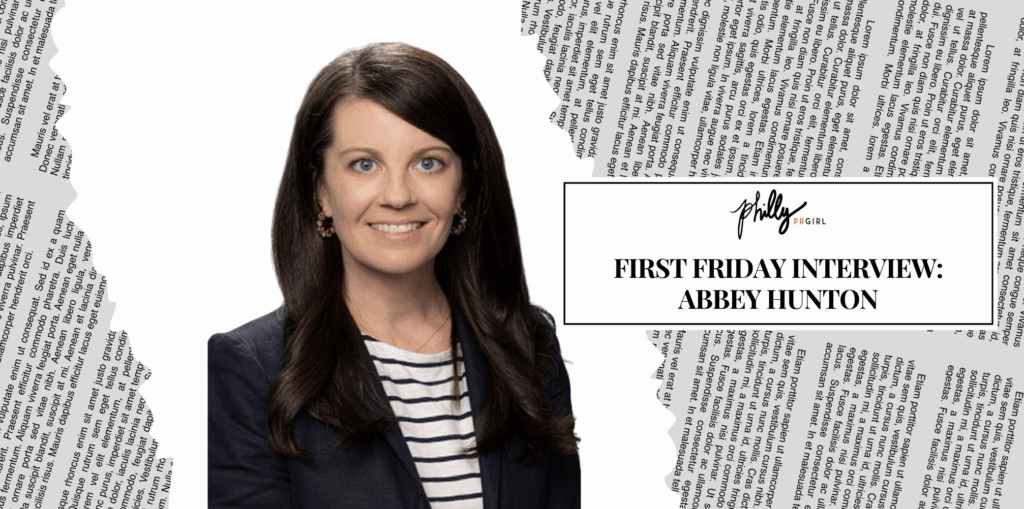
This month, we are honored to spotlight Abbey Hunton, a dedicated communications professional with the Alzheimer’s Association Delaware Valley Chapter. With a background in healthcare PR and a passion for storytelling, Abbey has devoted her career to elevating the voices of individuals and families impacted by Alzheimer’s and dementia. Through advocacy, community collaboration, and education, she helps bring awareness to a disease that affects thousands across Philadelphia and the Delaware Valley. In this interview, Abbey shares her personal inspiration, the power of community, and what gives her hope for the future.
PPRG: The Alzheimer’s Association has such a meaningful role across Philadelphia and the Delaware Valley. What inspired you personally to work in Alzheimer’s advocacy and communications, and how has this mission shaped your career?
ABBEY: My professional background is in health care PR and communications, previously for a large academic medical center in Philadelphia. When I came across the position with the Alzheimer’s Association, I was interested in working more closely with the community, in a role that would allow me to help tell the personal stories of those with Alzheimer’s and dementia, and their families, in order to raise awareness.
During my time with the Alzheimer’s Association, my role and interest in the work of our Public Policy and Advocacy team has grown, as I have seen firsthand the power that a personal story can have in conversations about legislation. When legislators are hearing from so many of their constituents, on a variety of issues, it’s so important to illustrate why the policies we are advocating for are so important—and this comes through in sharing the real-life experiences of those who are impacted.
I have also come to understand the importance of Alzheimer’s disease education, awareness, research, and advocacy, particularly here in Philadelphia. Ensuring that families and individuals know where to turn when they receive a diagnosis; know what treatments are available and how to access them; understand risk-reduction and disease prevention steps; are properly supported by providers—these are the things that are so critical to our community.
In the years since joining the team, the mission and the work has shaped how I want to spend my professional time over the long term—this disease is not slowing down, and time is of the essence. The urgency that is demanded of this work has been so motivating, and I can see the real difference we are making for those touched by dementia.
PPRG: Alzheimer’s doesn’t only affect individuals, it impacts families, caregivers, and entire communities. What have you learned from Philadelphia families facing Alzheimer’s that influences the way you approach your work today?
ABBEY: It’s difficult to sum up what I have learned from individuals and families, as I have learned so much over the years. From some I have learned patience; from others I have learned to think differently about how to better tell a story with passion and conviction; and from many, I have learned how to meet those with dementia where they are most comfortable, in that moment. I also have learned about the importance of making connections—everyone knows someone who has been impacted by dementia—and that there is always someone else who we can help.
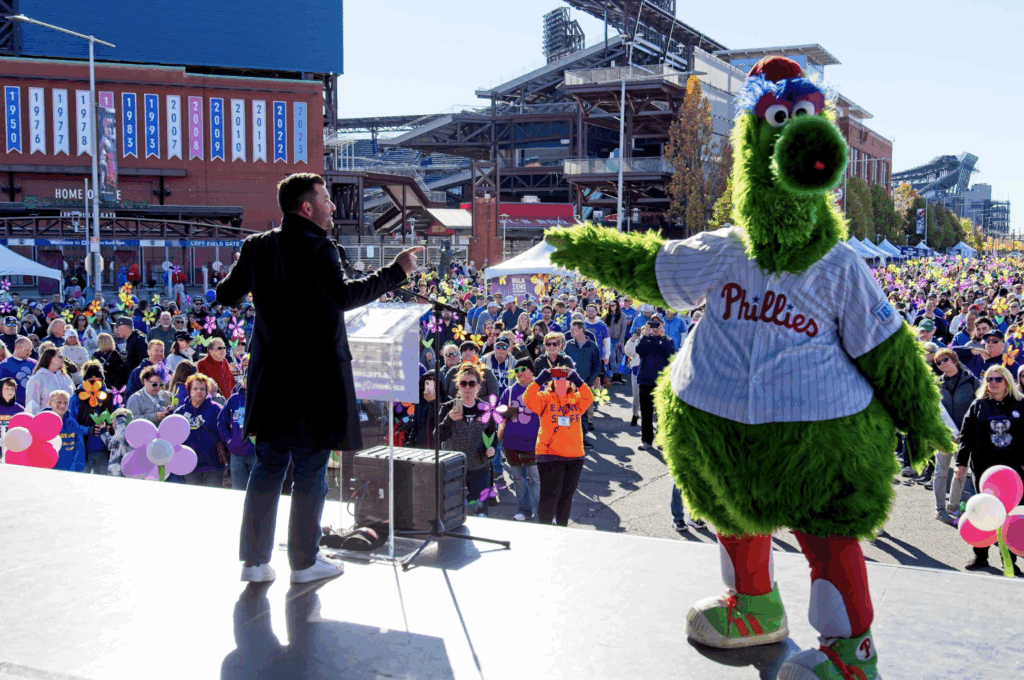
But one thing that has amazed me about those I’ve come to know who are living with Alzheimer’s and their families is how many are willing to share their personal experiences in such a public way—on TV, the radio, in a newspaper article, on social media, or on stage at the Walk to End Alzheimer’s. These are individuals who are navigating or living with a disease for which we sadly all know the outcome, and right now, the most we can hope for is more time. And yet, so many are putting themselves out there in the name of helping others. I have learned there is a selflessness in this community that is awe-inspiring. I have learned through these individuals and their families, and through my peers at the Association, that this mission is bigger than us, and it’s going to take every single one of us to change the trajectory of the disease—this has shaped how I show up to work each day.
(Photo Credit: George Arpajain)
PPRG: With November being National Alzheimer’s Awareness Month, what message or call to action do you hope Philadelphians take to heart?
ABBEY: I’d like Philadelphians to know that the Alzheimer’s Association is here, 24 hours a day, 365 days a year. Our Helpline—800.272.3900—is one of our most important resources, and I’d like folks to know that number. At any time, callers are connected with a trained, masters-level clinician who can help them with whatever their need is—whether it’s care planning or diagnosis questions, real-time advice to navigate a situation that is unfolding at the moment, or if the caller just needs someone to talk to—there is always someone on the other end of the line who can help. No one should feel like they are going through an Alzheimer’s or dementia journey alone, without knowing where to turn.
I’d also like Philadelphians to know that there are steps they can take to protect their brains—at any age. Building brain-healthy habits can help you live better now and protect your memory and thinking for the future. In fact, earlier this year, results from the Alzheimer’s Association U.S. Study to Protect Brain Health Through Lifestyle Intervention to Reduce Risk (U.S. POINTER) study—the first large-scale, randomized controlled clinical trial to evaluate whether lifestyle interventions that simultaneously target many risk factors can protect cognitive function in older adults who are at increased risk for cognitive decline—showed that an accessible and sustainable healthy lifestyle intervention, such as a combination of diet, exercise, heart health, and cognitive challenge and social engagement, can protect cognitive function in diverse populations in communities across the United States.
This, coupled with the disease treatments that have been approved by the Food and Drug Administration (FDA) in recent years—which finally treat the underlying biology of the disease—and the additional treatments that are in the pipeline, gives me hope that we are on a path to change the course of dementia.
PPRG: Philadelphia is known for its strong neighborhoods and community spirit. How has the local community shaped the way your chapter approaches awareness, caregiver support, or fundraising?
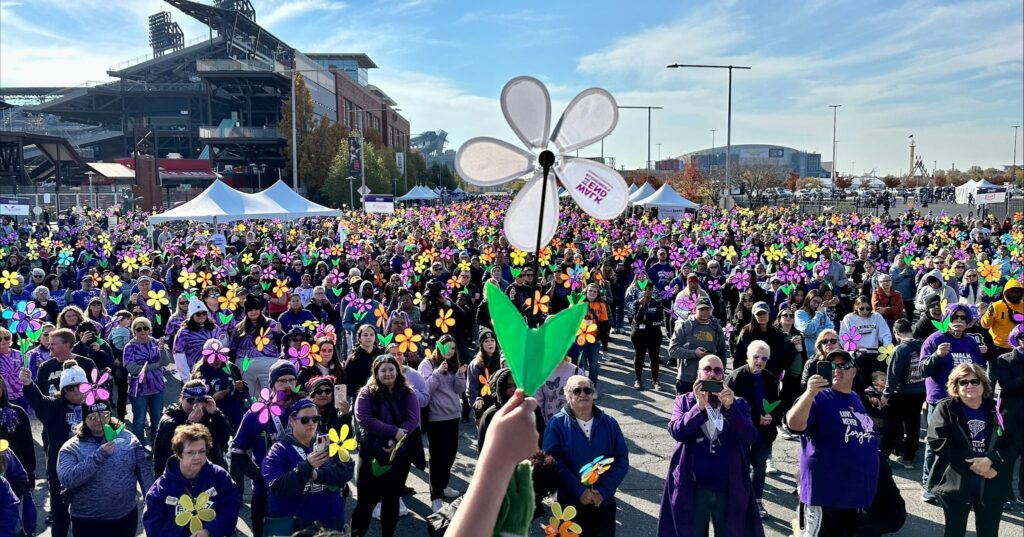
ABBEY: The local community is an incredible partner in and driver of, the work we are doing in the city and across the Delaware Valley. Most notable is our Walk to End Alzheimer’s – Philadelphia, taking place on Saturday, November 8, 2025, at Citizens Bank Park, which is the second-largest fundraising Walk in the country, out of more than 600 local community Walks. Each year, thousands support the Walk—nearly 7,000 gathered in 2024, and together, we collectively raised more than $1.5M. This year, our goal is to raise $1.675 million, which directly funds critical disease research and our support services.
We also have an incredible community of volunteers who power our mission. We have support group leaders who are meeting with groups regularly—in-person and virtually. We have awareness champions and community educators, who are going out into their neighborhoods, community centers, places of worship, their workplaces, and delivering programs that raise awareness and inform audiences about who we are, the impact of dementia, how to navigate their personal experiences, and more; and we have passionate and dedicated volunteers advocates who meet with their local, state and federal elected officials to advocate for legislation that supports those living with dementia and their families.
On top of these passionate individuals, we are connected to community leaders, and corporate and business leaders who understand the importance of awareness, education and fundraising for our mission, and who are leveraging their influence to make lasting and meaningful change. We are an organization fueled by our volunteer community, and here in Philadelphia, that is a strong and passionate group.
(Photo Credit: Abbey Hunton)
PPRG: What programs or services offered by the Delaware Valley Chapter do you wish more people knew about, especially families or caregivers just starting this journey?
ABBEY: As I mentioned, I’d want more caregivers and families of those with dementia—or those with a family history of the disease—to know about our 24/7 Helpline, which can help at any point along ones’ journey. We also offer online education programs, at no cost, which are available at training.alz.org. These interactive, engaging programs cover a wide range of topics such as “10 Warning Signs of Alzheimer’s,” “Managing Money: A Caregiver’s Guide to Finances,” and “The Empowered Caregiver Series,” among many others. We also have a new, no-cost app, My Alz Journey, which extends personalized support for newly diagnosed people and their care partners – this is an exciting development and resources for those who are navigating an extremely emotional and complex moment in their lives.
I would also encourage anyone caring for a loved one—or those at any stage along their journey—to seek out one of our support groups, which meet in person in communities across the country or virtually from the comfort of your own home. These can be found on the Community Resource Finder, alz.orf/crf. Finally, I want readers to know we are here for them—regardless of when, where, how, or why they may need support. I want the community to know that they are not alone in this journey.
PPRG: Collaboration is essential in nonprofit work. Can you share a meaningful partnership, whether with hospitals, businesses, or community groups, that has helped strengthen Alzheimer’s education or support here in Philadelphia?
ABBEY: Collaboration is critical to moving our mission forward and ensuring education, support, and resources reach communities everywhere. One such effort we have here in Philadelphia is our Black/African American Community Action Network. This is a collective of community leaders from the Black community in Philadelphia who are working together, with our Delaware Valley Chapter staff, to bring resources and programs into communities in the city. These community leaders—who hail from places like Always Best Care, Black Nurses Association of South Eastern PA, Center in the Park, Independence Blue Cross, the Penn Memory Center, and Philadelphia College of Osteopathic Medicine, among other organizations—help inform community needs, access to resources, and they have a role in shaping our annual Black/African American Caregiver Symposium. Held each spring, this event brings together caregivers from the black community for a day of education, engagement, and discussion on the role, impact, and needs of caregivers in Philadelphia. This event, and the Community Action Network, are critical to deepening our engagement within the community in Philadelphia.
What’s more, for our Walk to End Alzheimer’s – Philadelphia, corporate partnerships are vital, not only to fundraising, but to building awareness of our mission, our resources, and the impacts of Alzheimer’s and dementia. For our 2025 Philadelphia Walk, corporate partners from across the Delaware Valley, such as Always Best Care, BAYADA Home Health Care, Jefferson, Live! Hotel and Casino, to name a few, have formed Walk teams, joined our Executive Leadership Team, and are sponsoring the event. These partnerships help bring the Walk and our resources into the workplace, where so many employees and their families are impacted by the disease. Without dedicated partners—individuals, community leaders and influences, or those from corporate or community-based organizations—we would not be able to reach and support so many across Philadelphia and beyond.
PPRG: Looking ahead, what initiatives, research efforts, or community events are you most excited about in 2025 and beyond in the fight against Alzheimer’s?
ABBEY: There is so much to get excited about as we near the end of 2025 and look forward to 2026. Tomorrow, Saturday, November 8, our Philadelphia Walk to End Alzheimer’s will take place at Citizens Bank Park! This is the #2 Walk in the County, and we’re expecting a crowd of 7,000 participants to join us for an exciting and inspiring day. We encourage everyone to join us! Registration begins at 8:30 a.m., our stage program starts at 9:45 a.m., and the Walk will begin shortly after—we’ll walk around the stadium and then head inside and down to the outfield.
Beyond that, we’re looking forward many happenings this spring including: the Black/African American Caregiver Symposium; the release of our 2026 Alzheimer’s Disease Facts and Figures report—and annual report which shines a light on the burden of Alzheimer’s and dementia on individuals, caregivers, government and the nation’s health care system; and our State Advocacy Days in DE, NJ and PA, during which our volunteer advocates, staff and supports head to each state capitol to meet with legislators, share personal stories, and highlight the critical policy priorities of the Alzheimer’s Association in an effort to better support and serve those impacted by dementia, and their families, in our tri-state area.
There is so much on the horizon here in the Delaware Valley and beyond, with research and clinical trials happening at any moment around the world. We have seen tremendous progress in the Alzheimer’s and dementia research space in the last several years, and there is much more in the pipeline—more treatments, more prevention strategies, and more lab science to help better understand the brain and the causes of dementia. We are at a pivotal time—we are in the era of treatment—and as research continues, our vision of a world without Alzheimer’s and all other dementias draws closer
Abbey’s commitment to advocacy, storytelling, and community impact shines through every part of her work. From supporting families through diagnosis to shaping meaningful policy conversations, her dedication helps move us closer to a future where no one faces Alzheimer’s alone. We are grateful for her leadership and for the Alzheimer’s Association’s continued efforts to provide resources, education, and hope across Philadelphia and the Delaware Valley.
To learn more, access support, or get involved, visit alz.org or call the 24/7 Helpline at 800-272-3900.
*This blog is dedicated to every Philadelphian who is working to make a difference in our community.*