
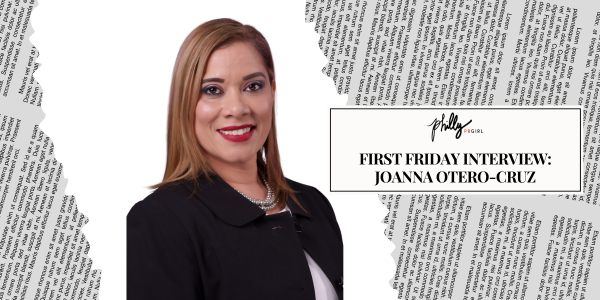
This month, we are honored to feature Joanna Otero-Cruz, Executive Director and President of Women Against Abuse. Joanna has dedicated her career to advocating for survivors and families across Philadelphia, leading with empathy, resilience, and an unwavering commitment to ending intimate partner violence. Read as she reflects on her personal journey, the importance of collaboration, and the power of community in creating a city where every person is safe and supported.
PPRG: Women Against Abuse has been a cornerstone in Philadelphia for decades. What drew you personally to this work, and how has your journey shaped your vision as the Executive Director and President?
JOANNA: Much of my career has centered on the safety of survivors and families in Philadelphia. Intimate partner violence is such a pervasive issue that it has been a constant thread throughout my work, beginning when I oversaw Behavioral and Family Health Services at Congreso de Latinos Unidos. Congreso collaborates closely with Women Against Abuse through its bilingual domestic violence program and by helping to operate the Philadelphia Domestic Violence Hotline.
This work has also impacted me personally. As a young single mother, I walked this journey firsthand. I understand what our clients are going through – and how essential support and compassionate services are. As the Executive Director and President of Women Against Abuse, I carry these experiences with me, ensuring that I lead with empathy, courage and a constant focus on the needs of survivors.
Credit: Marta Rusek
PPRG: Philadelphia is a city with unique challenges and strengths. How has the community influenced the way Women Against Abuse approaches advocacy, shelter, and prevention services?
JOANNA: Support systems – whether family, friends, colleagues, neighbors, city systems or organizations like Women Against Abuse – are absolutely crucial for people seeking to break free from abusive relationships.
At the systems-level, Women Against Abuse collaborates closely with many city systems to form a coordinated community response to IPV. This is evident through our work with the Domestic Violence Law Enforcement Committee and the Philadelphia Maternal Mortality Review Committee that is housed within the Philadelphia Department of Public Health’s Division of Maternal, Child, and Family Health. We also partner with dozens of local service providers to ensure survivors can access the support they need to be safe and thrive.
One example is Shared Safety, a groundbreaking, citywide initiative that Women Against Abuse pioneered. It is transforming Philadelphia’s approach to domestic and sexual violence, human trafficking, and reproductive coercion through cross-sector collaboration. It is a response to a need we saw across health and human services agencies. Historically, relational violence was addressed primarily through the criminal justice system, while health and human services were often not designed with survivors’ needs in mind. As a result, many systems weren’t equipped to respond effectively.
Shared Safety strengthens our community’s response by bringing stakeholders together to improve communication and coordination. It allows us to identify gaps and collective work to close them. Our vision is that, no matter where a survivor enters the City’s systems, they are immediately met with a supportive response and connected to the right resources.
PPRG: With October being Domestic Violence Awareness Month, what message do you hope Philadelphians take away about the urgency and importance of this cause?
JOANNA: Domestic Violence Awareness Month is about more than raising awareness — it’s about raising hope. Hope for people in abusive relationships who may feel invisible or alone. Hope that, by standing together, we can create a city where everyone is safe in their homes and relationships.
That’s why it’s so important to show up — ¡PRESENTE! — as the voice for those who cannot yet speak freely: our family members, colleagues, and neighbors trapped in unsafe situations. It means watching out for the most vulnerable among us, reminding our elected officials that funding for human services is essential, and opening our hearts and our doors to those seeking safety and care. Every Philadelphian experiencing domestic violence deserves a swift, compassionate response when they reach out for help. They deserve to be believed and listened to. They deserve safety. And they deserve the chance to create a new, brighter future.
At Women Against Abuse, we see that hope in action every day — through the calming voice of a hotline counselor, the refuge of our emergency shelters, the expertise and guidance of our Legal Center, and the stability of long-term housing that allows survivors and their children to heal and rebuild. But we cannot do this work alone. We need elected leaders, community organizations, first responders, and — most importantly — the voices of our city. Together, we can turn hope into reality.
PPRG: As Philly’s largest domestic violence service provider, how does Women Against Abuse balance urgent needs with long-term systemic change?
JOANNA: It’s always a challenge in the nonprofit sector, especially when most funding is tied to very specific outcomes through government contracts. That’s why we are always working to raise unrestricted private support — so we can remain nimble and responsive to the evolving needs of survivors.
We also live by our strategic plan. It’s not a five-year document that sits on a shelf; it’s a guidebook for decision-making and prioritization. This approach allows us to stay focused on long-term systems change while still delivering the urgent, daily services that survivors depend on.
In today’s environment of limited resources and increasing demand for services, collaboration among nonprofits is not only valuable, it is essential. By working together, we can maximize impact, avoid duplication, and ensure that every dollar and every effort goes further in serving our communities. Partnerships allow us to share expertise, pool resources, and amplify our collective voice, creating innovative solutions that no single organization could achieve alone. At the heart of collaboration is a commitment to our shared mission: ensuring that those we serve receive the support, dignity, and opportunities they deserve.
PPRG: Can you share an example of a strong partnership Women Against Abuse has In today’s environment of limited resources and increasing demand for services, collaboration among nonprofits is not only valuable—it is essential. By working together, we can maximize impact, avoid duplication, and ensure that every dollar and every effort goes further in serving our communities. Partnerships allow us to share expertise, pool resources, and amplify our collective voice, creating innovative solutions that no single organization could achieve alone. At the heart of collaboration is a commitment to our shared mission: ensuring that those we serve receive the support, dignity, and opportunities they deserve.built in Philly’s nonprofit, business, or government sectors?
Credit: Jose Rodriguez
JOANNA: Collaboration is at the heart of what we do, because we cannot fulfill our mission alone. One of our most crucial partnerships is with the Philadelphia Domestic Violence Collaborative, which consists of Women Against Abuse, Congreso de Latinos Unidos, Lutheran Settlement House and Women in Transition. Together, we run the 24/7 Philadelphia Domestic Violence Hotline, established in 2005 as a citywide, central point of access for help. The hotline receives about 10,000 calls a year, and offers crisis intervention, safety planning and connections to local resources, including Women Against Abuse’s life-saving services.
PPRG: What has been the most pressing issue you’ve seen in Philadelphia recently when it comes to supporting survivors, and how is Women Against Abuse addressing it?
JOANNA: Accessibility remains one of the most pressing issues – ensuring that our most vulnerable members know that Women Against Abuse is here as a resource. Domestic violence thrives in silence and isolation, and victims often feel trapped. That’s why it’s essential to spread the word:
- We provide two 100-bed confidential emergency shelters with 24-hour security and on-site supports.
- We have a 30-member legal team that represents survivors in Family Court.
- We provide transitional housing and community-based support.
- All of our services can be accessed through the 24/7 Philadelphia Domestic Violence Hotline at 1-866-723-3014.
- And we have a strong network of advocates and survivors to help light the way to safety.
We are deeply engaged in prevention and community engagement, attending dozens of events in neighborhoods across Philadelphia. Still, without an advertising budget, our reach is limited. That’s why we rely on free opportunities to raise awareness — like the digital bus shelter campaign that Center City District is currently running pro bono — and we are tremendously grateful for them.
PPRG: Can you share a story from your time at WAA that highlights the resilience of the Philadelphia community?
JOANNA: There are truly so many because our clients are incredible! One story that stands out is William’s. William tragically lost his daughter, Ameya, to domestic violence when she was killed by her abusive boyfriend just weeks after giving birth to their son. William reached out to us shortly after losing Ameya. He wanted to do something to create a legacy for his daughter. And that’s exactly what he did.
Through the years, William attended countless community events, panels, health fairs, and press conferences to raise awareness. He received the PCADV Excellence in Men’s Leadership Award, threw out the first pitch at Citizens Bank Park, and took the stage at our fundraising event to share his story and inspire action. He met with lawmakers to demand better funding and stronger policies to protect survivors.
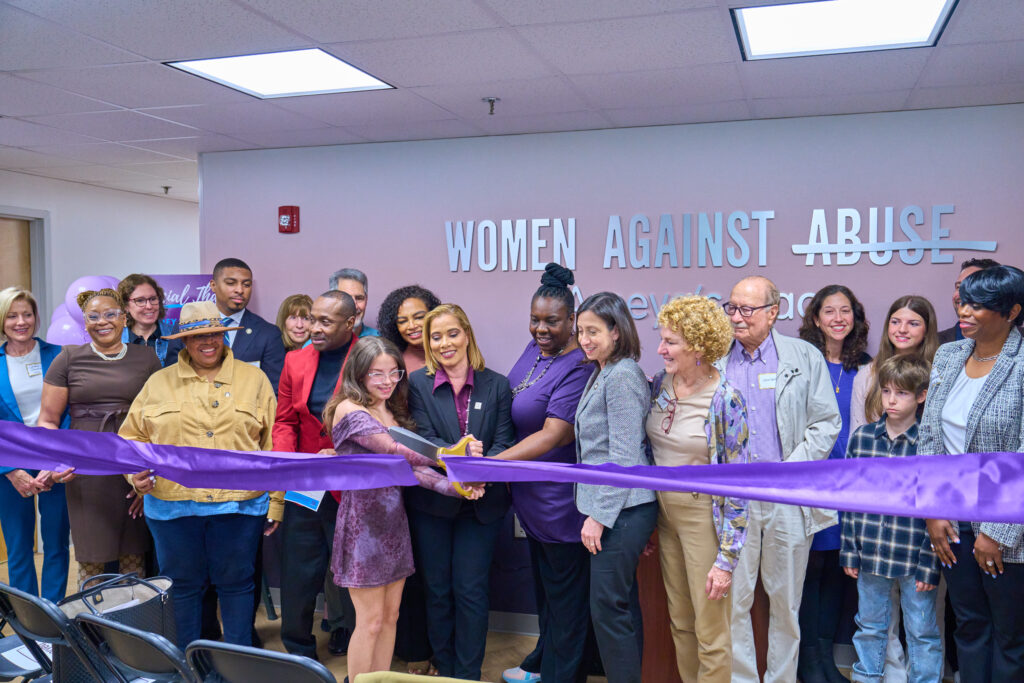
William and his extended family celebrated with us when Women Against Abuse named its first 100-bed emergency safe haven Ameya’s Place in memory of Ameya and the legacy she left behind.
Perhaps most notable, William raised Ameya’s three boys – his grandsons – and made sure they knew how much their mother loved them and that there is no room for violence in a loving relationship. William’s passion, resilience, and resolve continue to inspire survivors, families, and advocates across Philadelphia.
Credit: Jose Rodriguez
PPRG: Looking ahead, what initiatives, collaborations, or goals are you most excited about for Women Against Abuse, both during Domestic Violence Awareness Month and beyond?
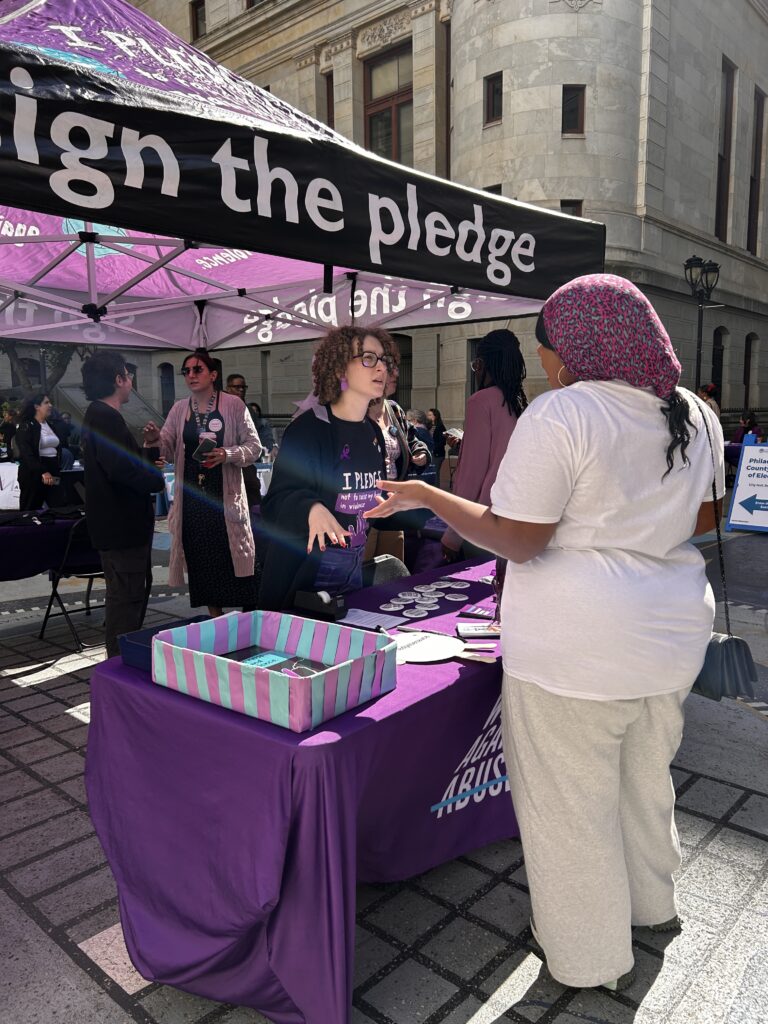
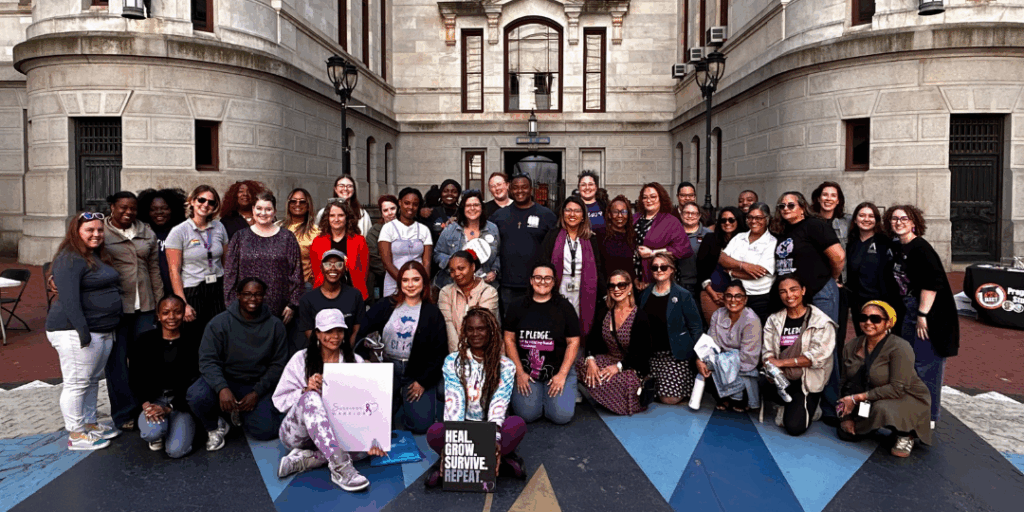
JOANNA: We just launched DVAM with our 18th Annual iPledge Campaign on October 1 in the courtyard of Philadelphia City Hall. Hundreds of community members, elected officials, survivors and advocates came together to pledge to build a future free from intimate partner violence. If you missed it, you can still make a difference by signing our pledge against violence at https://www.womenagainstabuse.org/events/ipledge/sign-the-pledge
The work continues with Paint Philly Purple on October 16. Purple is the color of the anti-domestic violence movement, and we invite everyone to wear purple to show solidarity with survivors. Snap a selfie and post it with #PaintPhillyPurple — it’s a fun, tangible way to raise awareness.
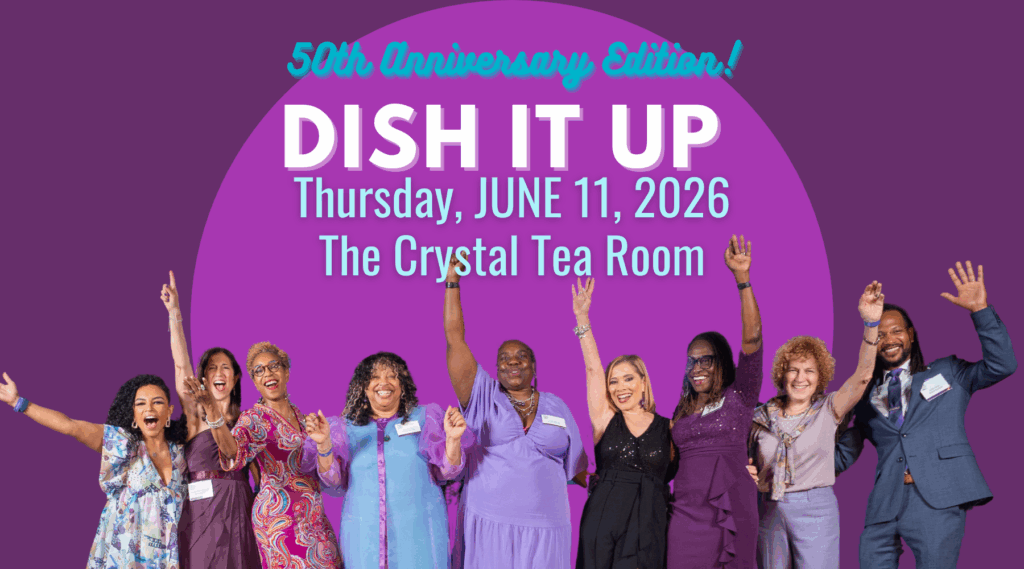
On October 23, Philadelphia City Council will officially proclaim October as Domestic Violence Awareness Month with a resolution at City Hall. We encourage community members to join our Policy Team and partners for this important moment. And looking ahead to 2026, Women Against Abuse will celebrate our 50th Anniversary with a special edition of Dish It Up, our hallmark fundraising event and women chef competition. The event will take place on June 11 at the Crystal Tea Room. We’ll share more details on our website, WomenAgainstAbuse.org, and encourage folks to sign up for our mailing list to stay connected.
If you would like to learn more about Women Against Abuse and the vital work they do, please visit womenagainstabuse.org.
Join the movement this Domestic Violence Awareness Month by signing the iPledge to build a future free from intimate partner violence and participating in Paint Philly Purple on October 16. Show your support by wearing purple and sharing your solidarity with the hashtag #PaintPhillyPurple. Together, we can raise awareness, inspire hope, and help create a safer Philadelphia for all.
*This blog is dedicated to every Philadelphian who is working to make a difference in our community.*